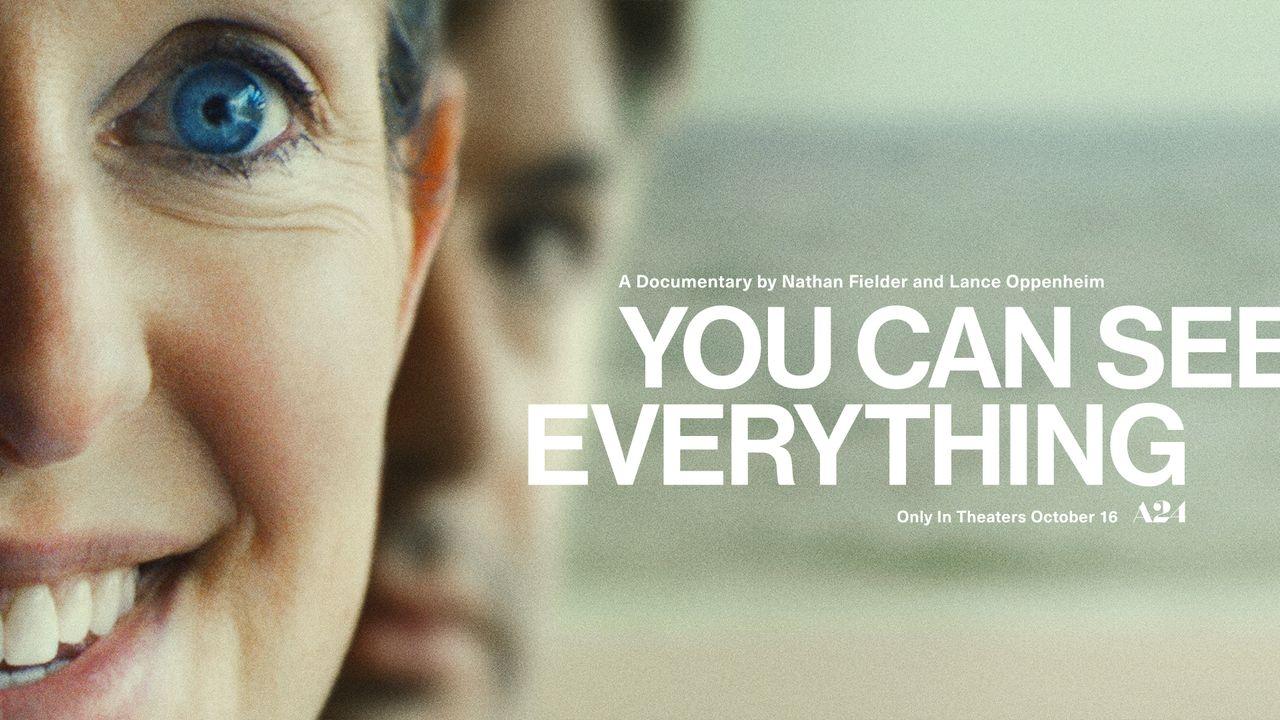
You Can See Everything is one of the most intriguing, well-put-together, and downright crazy documentary films I’ve seen. It’s nearly three hours long, and somehow, I never felt like I was watching a three-hour film. This is a ride, and I mean that in every sense of the word.
Now playing in theaters, the documentary takes us into the world of Elizabeth Holmes, the disgraced founder of Theranos. The story centers on her relationship with her new husband and what her life looked like before she entered prison to begin serving her sentence, as well as what followed.
There is so much to unpack here.
What makes this film particularly fascinating is the way Oppenheim constructs the story and how Nathan Fielder, who is also involved in the film as a director, fits into the larger picture. The filmmaking pulls you into a world that is difficult to look away from, and the deeper you get into it, the more complicated everything becomes.
By the end, my biggest takeaway was simple: words matter.
Really, words matter.
The way this film brings that idea full circle toward the end is absolutely brilliant. I found myself thinking about how much meaning we attach to the things people say, how those words shape the way we see others, and how they can change the way we understand an entire story. The conclusion left me with so much to think about, and I appreciated the way the film arrived there.
Another aspect that stood out to me was the filmmaker’s involvement in the story. When you’re investigating someone and spending that much time trying to understand their life, it is incredibly difficult to walk away without developing some kind of connection or feeling toward that person, whether you like it or not.
That is a complicated position for a documentary filmmaker to be in. You’re trying to investigate, observe, and tell a story, yet you’re also human. You can’t always separate yourself from the people you’re spending time with, especially when you’re digging this deeply into their lives.
That tension is part of what makes You Can See Everything so compelling. It becomes a human story, and that adds another layer to an already complex documentary.
The cinematography is beautiful, and the way the story is woven together is masterful. Every piece contributes to the larger picture, building toward an ending that brings everything into focus in a way I found absolutely brilliant.
How does one person put something like this together? The filmmaking, the storytelling, and the way the documentary makes you reconsider what you’ve watched are remarkable.
I’m going to be thinking about this film for weeks to come.
My rating: 5/5.
You Can See Everything is a home run. If you’re interested in documentaries that take a different approach to their subject and challenge the way you think about what you’re watching, this one is for you.
Go see it in theaters. You will not be disappointed.
And don’t let the nearly three-hour runtime scare you. It never felt like three hours to me.
This is so good.