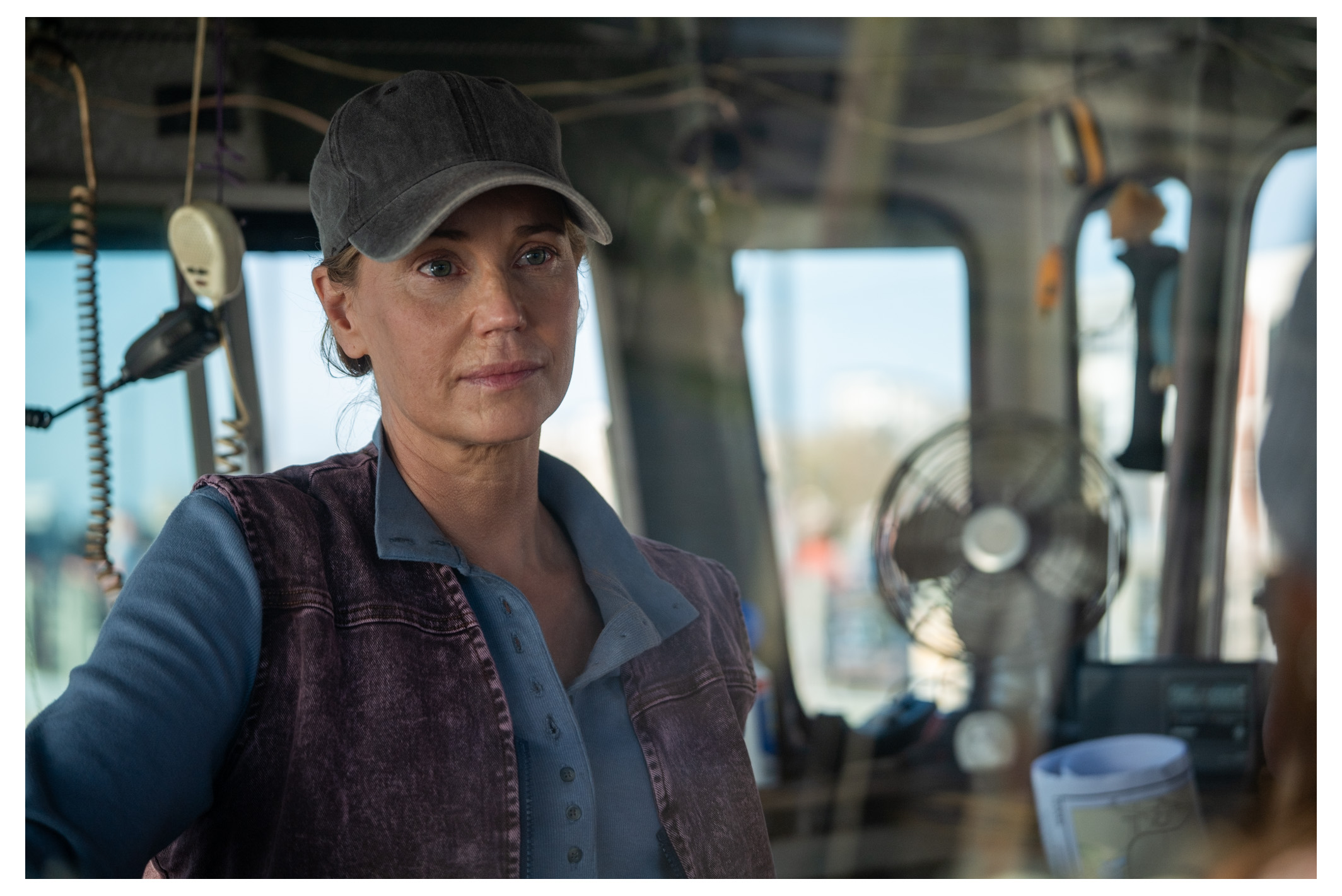
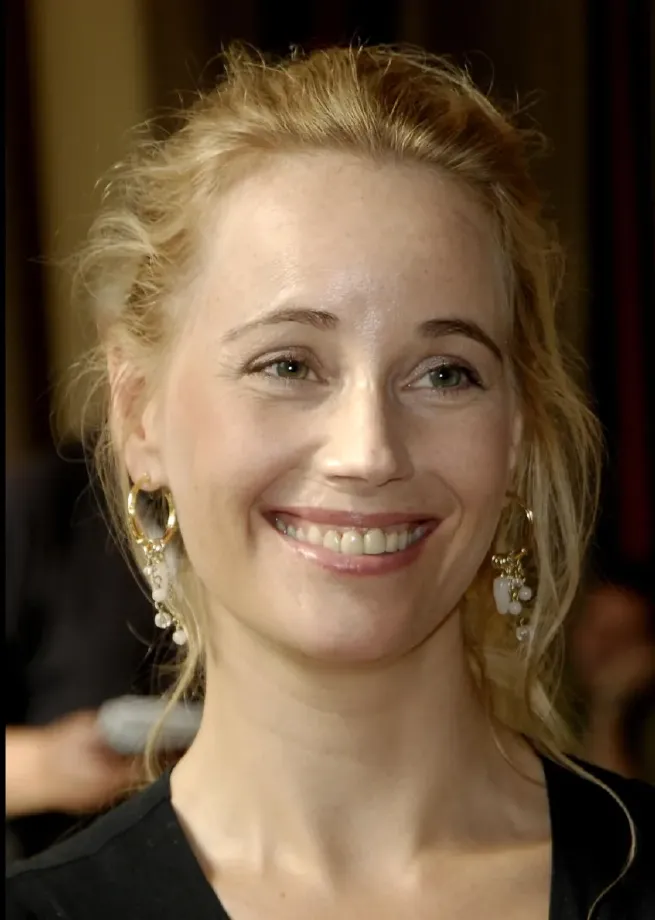
Sofia Helin is an internationally acclaimed Swedish film and television actress whose work has earned her multiple honors and widespread critical recognition. She won major acting prizes including the Danish Robert Award and Sweden’s Kristallen for her performance as Saga Norén in The Bridge, the four-season Scandinavian crime series that became one of the most successful Nordic TV dramas ever and brought her broad international fame. She has also received Guldbagge nominations for Dalecarlians and Masjävlar, as well as additional international nominations including the Monte-Carlo TV Festival and the UK Crime Thriller Awards.
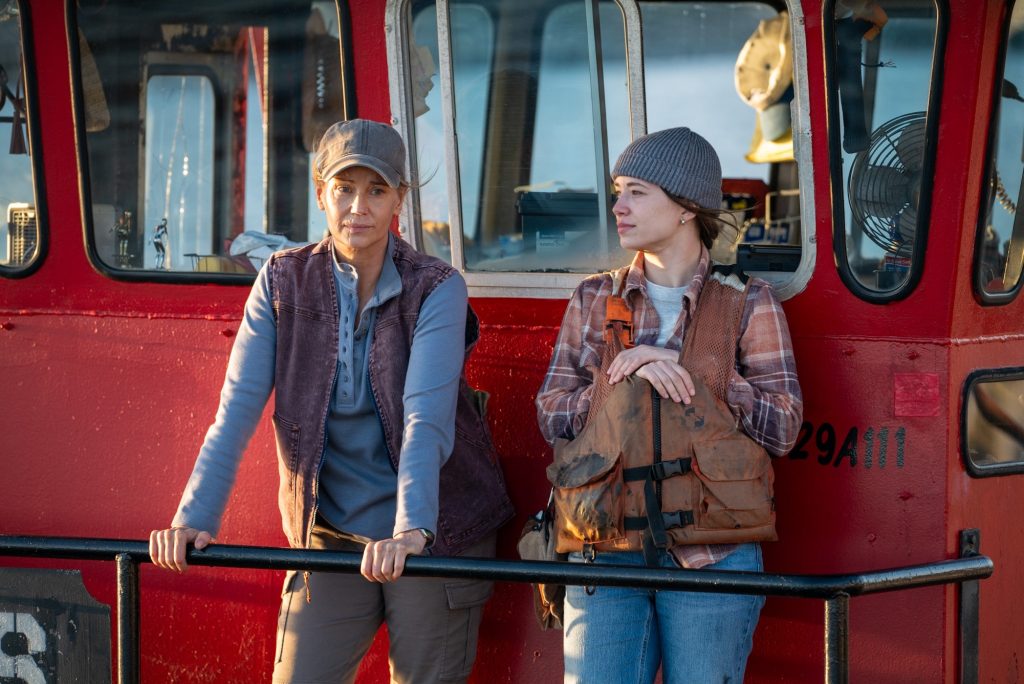
She stars in the forthcoming short film Boatlift 9/11, in which a seasoned tugboat captain and her daughter are called into action on the morning of September 11, 2001, joining the largest maritime evacuation in history as more than 500,000 people were rescued from Lower Manhattan. Boatlift 9/11 is produced by Suzanne DeLaurentiis Productions and the Mendez National Institute of Transplantation Foundation.
Q: In Boatlift 9/11, you portray Jan, a tugboat captain thrust into the chaos of 9/11; what first spoke to you about this character and her emotional journey through that day?
SH: I’ve always been drawn to extreme circumstances. There’s something deeply revealing in them—the question of who we become when everything falls away. When you’re stripped of control, of certainty… what remains? And can you rise to meet the person you hope you are?
Q: The story of Boatlift 9/11centers on ordinary people becoming extraordinary heroes; how did you prepare to embody a real-world kind of heroism that is quiet, practical, and driven by duty rather than spectacle?
SH: I immersed myself in the reality of it—watching documentary footage from 9/11 and studying the rhythm of a tugboat captain’s life. But at a certain point, you have to let go of research and step into imagination. Acting, for me, is about entering the emotional truth of a moment and allowing it to live in you.
Q: You’ve become globally known for playing complex women like Saga Norén in The Bridge and Crown Princess Märtha in Atlantic Crossing; what aspects of Jan in Boatlift felt like a natural extension of those roles, and what felt completely new?
SH: I’m always drawn to characters governed by moral tension—that’s where drama truly lives, in the space between what we feel and what we believe we must do. Jan is a woman who has built her identity around control. But when catastrophe hits, that illusion fractures. She’s someone who has, in many ways, lost faith—in others, perhaps even in life itself. Exploring that darkness, that quiet resignation, and then watching it shift—that was something new for me. Painful, but very alive.
Q: Boatlift is inspired by the largest maritime evacuation in history, yet it is told through an intimate mother-daughter story; how did you and your co-star work together to create that bond between Jan and Britt on screen?
SH: There’s a kind of surrender that has to happen between actors—you have to meet each other without defenses. With Preslea, that connection was immediate. There was trust, instinct, and an unspoken understanding. From that, something very real could grow—something that felt less like performance and more like truth.
Q: The film also touches on themes of trauma, guilt, and resilience in the aftermath of catastrophe; how did your own life experiences inform how you approached Jan’s inner conflicts?
SH: I’ve never experienced anything close to that scale of tragedy, so imagination became essential. But the emotional landscape is something we all recognize. There’s a fear in being alive sometimes—a temptation to close off, to protect yourself by feeling less. I think many of us live with that tension. To remain open, to remain hopeful… that’s a choice you have to make again and again.
Q: Many viewers still associate you strongly with Saga Norén, a character who became a role model for people on the autism spectrum; did playing Jan in Boatlift allow you to explore a different kind of vulnerability and strength than Saga’s very controlled, intellectual toughness?
SH: Vulnerability is always at the core of my work—it just manifests differently. Saga carried it in a kind of exposed fragility; her struggle was both in understanding social codes and in being understood by others. Jan, on the other hand, has buried that vulnerability. She’s armored herself against the world. But underneath that armor, the same loneliness exists.
Q: Boatlift 9/11is timed to honor the anniversary of 9/11 and the unsung civilians who responded; as a Swedish actress, how did you connect personally to this very American tragedy, and what responsibility did you feel in bringing this story to a global audience?
SH: 9/11 is one of those moments that lives in collective memory. I remember it vividly, even from Sweden. What people here might not always reflect on is how closely Europe follows what happens in the United States. There’s also a deep historical connection—nearly a fifth of Sweden’s population emigrated to the U.S. in the 19th and early 20th centuries. That legacy still lingers, culturally and emotionally. In many ways, America has never felt entirely distant to us. What moved me about Boatlift was its focus on something quieter within that immense tragedy—the question of who we become in crisis. It’s universal, and it’s ongoing. As an actor, I try not to carry the weight of responsibility while I’m working. I try to stay inside the story. But there’s a humility in being part of something that reflects such a profound moment in history.
Q: How do you see this role fitting into your evolving career and interest in working across international productions?
SH: I don’t think of my work in terms of trajectory. I try to stay present with each story, to let it shape me rather than the other way around. There’s something beautiful about working across different countries and cultures. But in the end, a film set always feels the same to me—it’s like stepping into a shared language, a place where you belong.
Q: How would you describe Jan’s emotional transformation over the course of the film?
SH: I don’t know if Jan would articulate it this way, but to me, it feels like an awakening. Through grief, through chaos—but also through witnessing acts of humanity—she reconnects with something essential. A kind of recognition of what we’re capable of when we choose compassion over fear.
Q: What do you hope audiences take away from Boatlift 9/11?
SH: I hope the film invites reflection—not only on the event itself, which remains surprisingly unknown in its full scope, but on what people chose to do for one another in that moment.And perhaps, more importantly, on what we define as strength. Is it hardness? Control? Retaliation? Or is it the courage to remain open—to act with compassion, even in the face of fear?